 Wie lebt mein Essen?
Milk · Outdoors
Do dairy cows get to graze on pasture?
Usual: the barn. 69 of 100 dairy cows never see a pasture. Furthest along: Tierschutzbund premium level. Weakest: 3 standards, among them Conventional and Pasture milk without a label.
Why it is like this
Only just under 31 of 100 dairy cows got onto a pasture in 2019. Pasture milk without a label is not legally protected, and courts accepted about 120 days a year and at least 6 hours a day, so roughly four months. Bioland requires grazing from April to October, Naturland at least six months.
What the labels say
| Standard | Level |
|---|---|
| Conventional | 1-3 level 1 guaranteed (Never. A bright barn is enough); up to level 3 depending on the farm |
| Pasture milk without a label | 1-3 level 1 guaranteed (Never. A bright barn is enough); up to level 3 depending on the farm |
| Pro Weideland | 3 On a few days a week |
| Tierschutzbund entry level | 2 Never, but it feels fresh air in the barn |
| Tierschutzbund premium level | 4 On almost every day |
| Organic (EU) | 3-4 level 3 guaranteed (On a few days a week); up to level 4 depending on the farm |
| Biopark | 3-4 level 3 guaranteed (On a few days a week); up to level 4 depending on the farm |
| Gäa | 3-4 level 3 guaranteed (On a few days a week); up to level 4 depending on the farm |
| Bioland | 3-4 level 3 guaranteed (On a few days a week); up to level 4 depending on the farm |
| Naturland | 3-4 level 3 guaranteed (On a few days a week); up to level 4 depending on the farm |
| Demeter | 3-4 level 3 guaranteed (On a few days a week); up to level 4 depending on the farm |
| Zeit zu zweit (cow and calf together) | 3-4 level 3 guaranteed (On a few days a week); up to level 4 depending on the farm |
How we read the levels
- Never. A bright barn is enough.
- Never, but it feels fresh air in the barn.
- On a few days a week.
- On almost every day.
Level 1: Never. A bright barn is enough.
Applies to: Conventional and Pasture milk without a label
The cow never goes outside. This applies to about 69 out of 100 dairy cows, and only just under 31 out of 100 get onto a pasture.
These are figures from 2019 and 2020. Pasture farms use the pasture for 25 weeks a year on average. The scientific advisory board of the agriculture ministry warns that even an exercise yard might be counted as pasture. Of the farms with tie stalls, 48 percent kept the animals in place all year.
Level 2: Never, but it feels fresh air in the barn.
Applies to: Tierschutzbund entry level
Possible on some farms, not guaranteed: Conventional and Pasture milk without a label
The cow stays in the barn but feels fresh air. This is the case in the Tierschutzbund's outdoor climate barn (entry level).
The outdoor climate barn has open sides, but the cow does not leave the barn. The Tierschutzbund requires it at the entry level, and pasture access is not required there.
Level 3: On a few days a week.
Applies to: Pro Weideland, Organic (EU), Biopark, Gäa, Bioland, Naturland, Demeter and Zeit zu zweit (cow and calf together)
Possible on some farms, not guaranteed: Conventional and Pasture milk without a label
The cow goes outside on some days of the year. Pasture milk without a label and Pro Weideland are here: about four months a year, at least six hours a day.
That is 120 days, one third of the year. The term "Weidemilch" is not protected, and a court (OLG Nürnberg 2017) found these 120 days of 6 hours not misleading. What happens on the other 245 days remains open. Pro Weideland additionally requires 2,000 square metres of grassland per cow, of which 1,000 is pasture, and rules out tie stalls. Organic requires pasture whenever weather and soil allow it, in Germany from April to October.
Level 4: On almost every day.
Applies to: Tierschutzbund premium level
Possible on some farms, not guaranteed: Organic (EU), Biopark, Gäa, Bioland, Naturland, Demeter and Zeit zu zweit (cow and calf together)
The cow goes outside on almost every day. The Tierschutzbund (premium) and the organic associations are here.
Tierschutzbund Premium requires pasture from April to October, at least six hours a day, and an exercise yard all year. Bioland allows pasture whenever weather and soil permit, otherwise an outdoor run all year. Naturland requires pasture access during the growing season. Demeter requires pasture in the growing season, 600 square metres per livestock unit.
What stays open
There is no fixed rule for conventional milk. The usual case: only about 31 out of 100 cows get onto a pasture, and the rest stay in the barn or exercise yard.
Videos
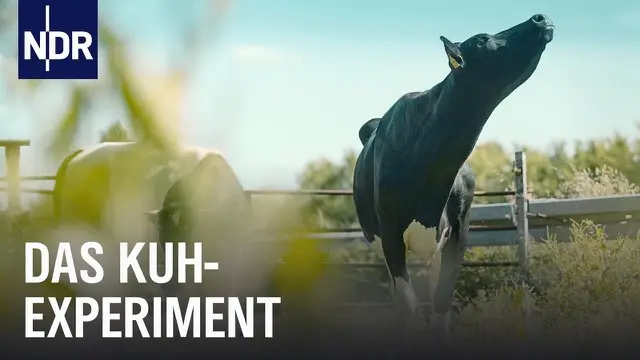 High-performance dairy cattle: how much instinct is in the cow?NDR Doku, 44 min
A high-yield cow raised indoors steps onto a pasture for the first time.
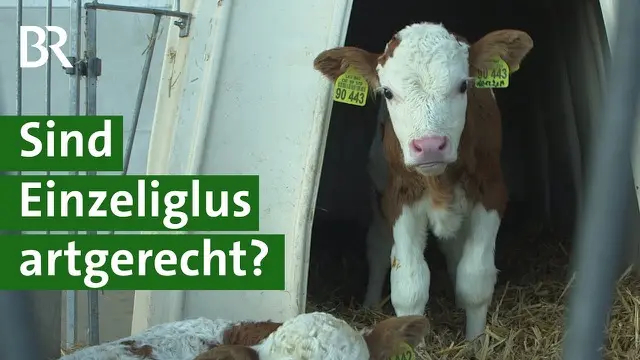 Calf mortality: is keeping calves in calf igloos appropriate for the species?Unser Land, 5 min
Calves mostly live alone in igloos. The report asks whether that suits the animals.
Further reading
Sources
- ProVieh: fact sheet dairy cows 2023 (animal welfare organisation)
- Albert Schweitzer Stiftung: Milchkühe
- Albert Schweitzer Stiftung: Anbindehaltung
- Animal welfare label (Tierschutzlabel), consumer advice centre 11/2026
- Consumer advice centre: pasture milk, how much pasture is in it?
- Pro Weideland, consumer advice centre
- Bioland standards 03/2026
- Naturland production standards 05/2026
- Demeter standards 2026
- EU regulations 2018/848 and 2020/464
- Biopark producer standards 01/2022
- Gäa standards 03/2025
- Everything on Milk
- How long do dairy cows live?
- Are calves separated from their mothers?
- How much room do dairy cows have?
- What do dairy cows lie on?
- Are dairy cows' horns removed?
- How long are cows transported?
- How are dairy cows slaughtered?
- Label: Conventional farming
- Label: Pasture milk without a label
- Label: Pro Weideland
- Label: Tierschutzbund label
- Label: EU organic
- Label: Biopark
- Label: Gäa
- Label: Bioland
- Label: Naturland
- Label: Demeter
- Label: Zeit zu zweit (cow and calf together)
- Demeter vs Bioland: Milk
- Bioland vs Naturland: Milk
- Demeter vs Naturland: Milk
- Bioland vs EU organic: Milk