 Wie lebt mein Essen?
Fish · Lifespan
How old are fish when they are killed for food?
Slaughtered as soon as the fish reaches eating size. Level at the front: 4 standards, among them Farmed salmon, conventional, Salmon with ASC label and EU organic aquaculture (salmon, trout). Weakest: Pond farming, conventional (carp, trout) and Pond farming, organic (carp, trout).
Why it is like this
The pond carp is harvested after three summers at 1 to 1.5 kilograms. A farmed salmon weighs about 5 kilograms at slaughter according to a retailer and needs about three years from the egg. According to the FAO, farmed trout of portion size are mostly 12 to 18 months old. The highest reported age comes from FishBase: carp 38 years, Atlantic salmon 13, rainbow trout 11. The page does not say whether these fish lived in the wild or in care, so it is an upper limit, not a usual value. No label regulates the slaughter age. With conventional farmed salmon, according to the Norwegian Veterinary Institute, one in four dies early and one in six before reaching slaughter size.
What the labels say
| Standard | Level |
|---|---|
| Wild fish without a label | no fixed rule |
| Wild fish with MSC label | no fixed rule |
| Farmed salmon, conventional | 1-2 level 1 guaranteed (Until it is big enough to be used. It may still be very young); up to level 2 depending on the farm |
| Salmon with ASC label | 1-2 level 1 guaranteed (Until it is big enough to be used. It may still be very young); up to level 2 depending on the farm |
| EU organic aquaculture (salmon, trout) | 1-2 level 1 guaranteed (Until it is big enough to be used. It may still be very young); up to level 2 depending on the farm |
| Naturland aquaculture | 1-2 level 1 guaranteed (Until it is big enough to be used. It may still be very young); up to level 2 depending on the farm |
| Pond farming, conventional (carp, trout) | 1 Until it is big enough to be used. It may still be very young |
| Pond farming, organic (carp, trout) | 1 Until it is big enough to be used. It may still be very young |
How we read the levels
- Until it is big enough to be used. It may still be very young.
- Until it is at least fully grown.
- Until it has lived half of its possible life.
- Until it is old.
- Until it dies of its own accord.
Level 1: Until it is big enough to be used. It may still be very young.
Applies to: Farmed salmon, conventional, Salmon with ASC label, EU organic aquaculture (salmon, trout), Naturland aquaculture, Pond farming, conventional (carp, trout) and Pond farming, organic (carp, trout)
The pond carp is harvested after three summers at 1 to 1.5 kg, as soon as it has reached eating size. This is how it is in conventional and organic pond farming.
The young fry is tiny, with 2,000 fitting on a teaspoon. After four weeks it weighs 1 g, after the first summer 20 to 40 g, and after the second 250 to 300 g. The age groups are kept separate and harvested every year. FishBase gives the highest reported age of carp as 38 years, without saying whether the fish lived in the wild or in care. Three years is then just under eight percent. That is an upper limit, not a usual value.
Level 2: Until it is at least fully grown.
Possible on some farms, not guaranteed: Farmed salmon, conventional, Salmon with ASC label, EU organic aquaculture (salmon, trout) and Naturland aquaculture
Farmed salmon and farmed trout are slaughtered when they reach eating size. A salmon then weighs about 5 kg according to one retailer. A farmed trout of portion size is mostly 12 to 18 months old, and a farmed salmon needs about 3 years from the egg. Highest reported age: trout 11, salmon 13 years.
The table counts farmed salmon, ASC, EU organic and Naturland at 1 to 2, but without a source. Trout: the FAO writes that fish of 280 to 400 g are harvested after 12 to 18 months (worldwide figure). Salmon: the production cycle takes about 3 years (EUMOFA, section 1.2.1). FishBase gives the highest reported age as 11 years (rainbow trout) and 13 years (Atlantic salmon), without saying whether wild or in care. That is roughly one tenth to one quarter. The 5 kg comes from a test.de report of 2012, so it is not current.
What stays open
There is no rule on this. For wild catch there is no age rule, and whatever goes into the net is caught (there are minimum sizes per species, UNSICHER).
Videos
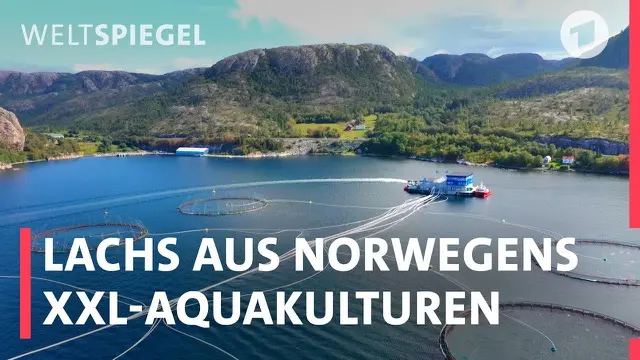 The tough business with salmonWeltspiegel, 29 min
Salmon farming in Norway: how the fish are kept and what problems arise.
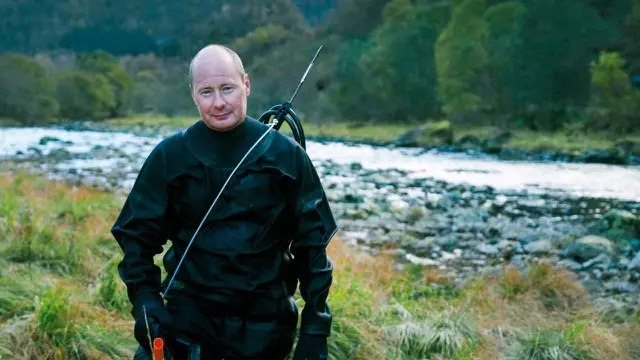 Re: Salmon crisis in NorwayARTE, 30 min
On Norwegian salmon farms many fish die from a parasite, the salmon louse.
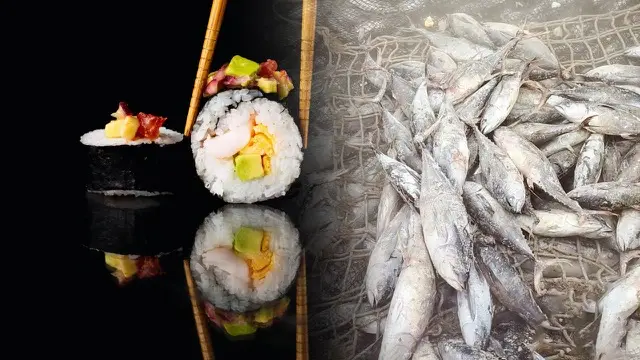 Sushi hunger: a lifestyle with downsidesSWR, 45 min
The film shows the fishing and aquaculture behind the sushi boom and its consequences.
Further reading
- LfL Bayern: Leaflet on carp pond farming (age classes K0 to K3) (in German) (PDF, state agency)
- Verbraucherzentrale Hamburg: Buying salmon, better not (in German) (Article, consumer advice centre)
Sources
- LfL-Merkblatt Karpfenteichwirtschaft
- FishBase: common carp (Cyprinus carpio), maximum reported age
- FishBase: Atlantic salmon, maximum reported age
- FishBase: rainbow trout, maximum reported age
- LfL Bavaria: carp pond farming
- FAO: rainbow trout in aquaculture
- EUMOFA: fresh organic salmon in the EU, section 1.2.1
- lfl.bayern.de
- fishbase.se
- test.de
- fao.org
- fishery-aquaculture-market-observatory.ec.europa.eu
- fishbase.se
- Everything on Fish
- Do farmed fish ever see their parents?
- How much space do farmed fish have?
- What does a farmed fish's habitat look like?
- Do farmed fish live outdoors?
- What treatments do farmed fish get?
- How long are live fish transported?
- How are fish killed?
- Label: Farmed salmon, conventional
- Label: ASC (farmed salmon)
- Label: EU organic aquaculture
- Label: Naturland aquaculture
- Label: Pond farming, conventional
- Label: Pond farming, organic