 Wie lebt mein Essen?
Eggs · Lifespan
How long do laying hens live?
Could live several years. Is slaughtered after a little over a year of laying. The same for every label: For the laying hens themselves, rung 2 applies: barn, free-range, organic and all associations slaughter them when laying performance declines, usually after 12 to 15 months of laying.
Why it is like this
A laying hen today lays around 300 eggs a year, her wild ancestor only 10 to 40 depending on the source. When output drops, usually after 12 to 15 months of laying, the hen goes to slaughter, although according to sanctuaries and associations a chicken can reach 5 to 10 years. Studies find breastbone fractures in up to over 90 of 100 hens in a flock, and there are clear signs that it hurts. The hens' brothers do not lay eggs: until the end of 2021 about 40 million male chicks a year were killed on their first day, today most are sorted out in the egg.
What the labels say
| Standard | Level |
|---|---|
| Barn eggs | 2 |
| Free range | 2 |
| Tierschutzbund entry level | no fixed rule |
| Tierschutzbund premium level | no fixed rule |
| Neuland | 2 |
| Organic (EU) | 2 |
| Biopark | 2 |
| Gäa | 2 |
| Bioland | 2 |
| Naturland | 2 |
| Demeter | 2 |
How we read the levels
- Until it is big enough to be used. It may still be very young.
- Until it is at least fully grown.
- Until it has lived half of its possible life.
- Until it is old.
- Until it dies of its own accord.
Level 2: Until it is at least fully grown.
For the laying hens themselves, rung 2 applies: barn, free-range, organic and all associations slaughter them when laying performance declines, usually after 12 to 15 months of laying. They are then grown, but not old.
A high-performance hen lays almost 300 eggs a year, while her ancestors, the red junglefowl, lay at most about 40 (ASS). After the laying period, the animals are mostly sold as soup chickens, and some are used as animal feed or in biogas plants (ASS, as of 2021: about 34 million hens a year). How old a hen can get is not reliably documented in our sources (UNSICHER, ranges of 8 to 15 years in weak sources).
What stays open
The Tierschutzbund label and Biopark state no maximum age. The usual case is the end of the laying period after 12 to 15 months.
Videos
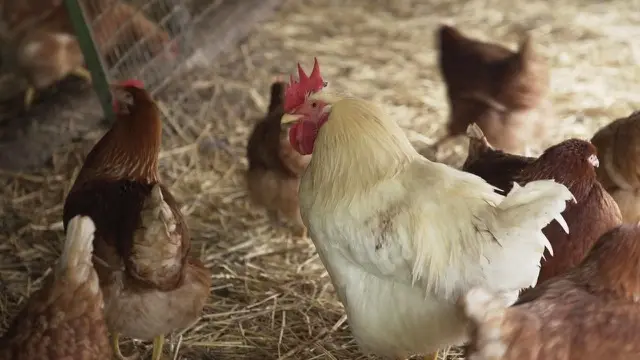 Chick culling despite the ban? On the trail of the brother roostersNDR, 8 min
The report asks whether male chicks are still killed or sent abroad despite the ban.
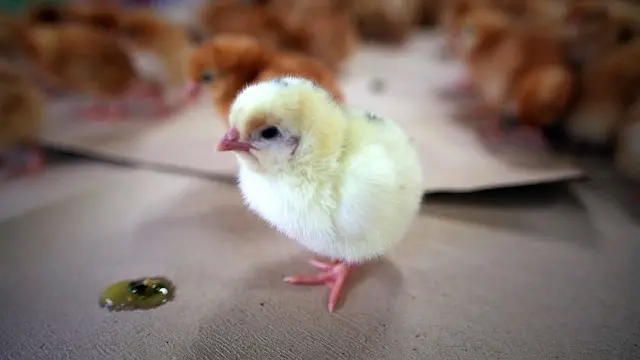 Chick culling banned: the alternatives do not solve the problemsBR, 29 min
The report explains the alternatives to chick culling and why they bring problems of their own.
 From brother rooster to barn: which egg is best for environment and hen?SWR, 17 min
Compares barn, free-range and organic eggs and what each means for the hens.
Further reading
- Albert Schweitzer Stiftung: Laying hens (in German) (Article with many photos)
- Verbraucherzentrale Hamburg: Where can I get eggs without chick shredding? (in German) (Article)
- Federal government: Ban on chick killing reformed (3.5.2023) (in German) (Official announcement)
Sources
- Albert Schweitzer Stiftung, Legehennen, gelesen
- Albert Schweitzer Stiftung, Faktenblatt Legehennen 14.09.2016
- EU regulations 2018/848 and 2020/464
- Albert Schweitzer Stiftung: fact sheet laying hens (animal welfare organisation)
- University of Giessen 2024: breastbone damage in laying hens
- German government: killing of chicken embryos
- Swissveg: life expectancy of farm animals (animal welfare association)
- Everything on Eggs
- Do laying hens ever see their mother?
- How much space does a laying hen have?
- Where do laying hens sleep and rest?
- How often are laying hens outside?
- Are laying hens' beaks trimmed?
- How long are laying hens transported?
- How are laying hens killed?
- Label: Barn and free-range eggs
- Label: Neuland
- Label: EU organic
- Label: Biopark
- Label: Gäa
- Label: Bioland
- Label: Naturland
- Label: Demeter
- Demeter vs Bioland: Eggs
- Bioland vs Naturland: Eggs
- Demeter vs Naturland: Eggs
- Neuland vs EU organic: Eggs